
During the Victorian era, a home’s front porch was more than a place to enter the house. It was a public statement of social standing, wealth, and good taste. Designed to impress neighbors and passersby, these outdoor spaces showed off elaborate details made possible by the new ability to mass-produce ornate trim and millwork. Turned columns, decorative gingerbread, spindles, and intricate brackets turned the porch into an elegant outdoor living room for welcoming guests.
More than a century of sun, rain, and snow, along with decades of well-intentioned but often incorrect repairs, has left many of these porches stripped of their original character. Restoring a Victorian front porch means balancing historical authenticity with modern building practices, materials, and safety standards. Here is a brief outline for bringing these timeless features back to life.
Check the foundation and framing
Old homes come with problems that either developed over time or came from outdated building methods. Victorian porches often settle because of shallow footings or poor drainage, so the structure is always the first thing we look at.
- Inspect the footings. Original brick or stone piers often sink or shift over the years. Replace unstable bases with poured concrete footings set below the frost line, then disguise them behind traditional brick facing or decorative lattice.
- Check joists and posts. Moisture tends to rot the bottom 6 to 12 inches of porch posts and rim joists. Rather than replacing entire hand-carved posts, experienced restorers jack up the roof slightly and splice in new rot-resistant wood at the base, a technique known as a dutchman repair.
Restoration tip: Secure local building permits early. Historical districts often require approval for structural changes and materials before any work begins.
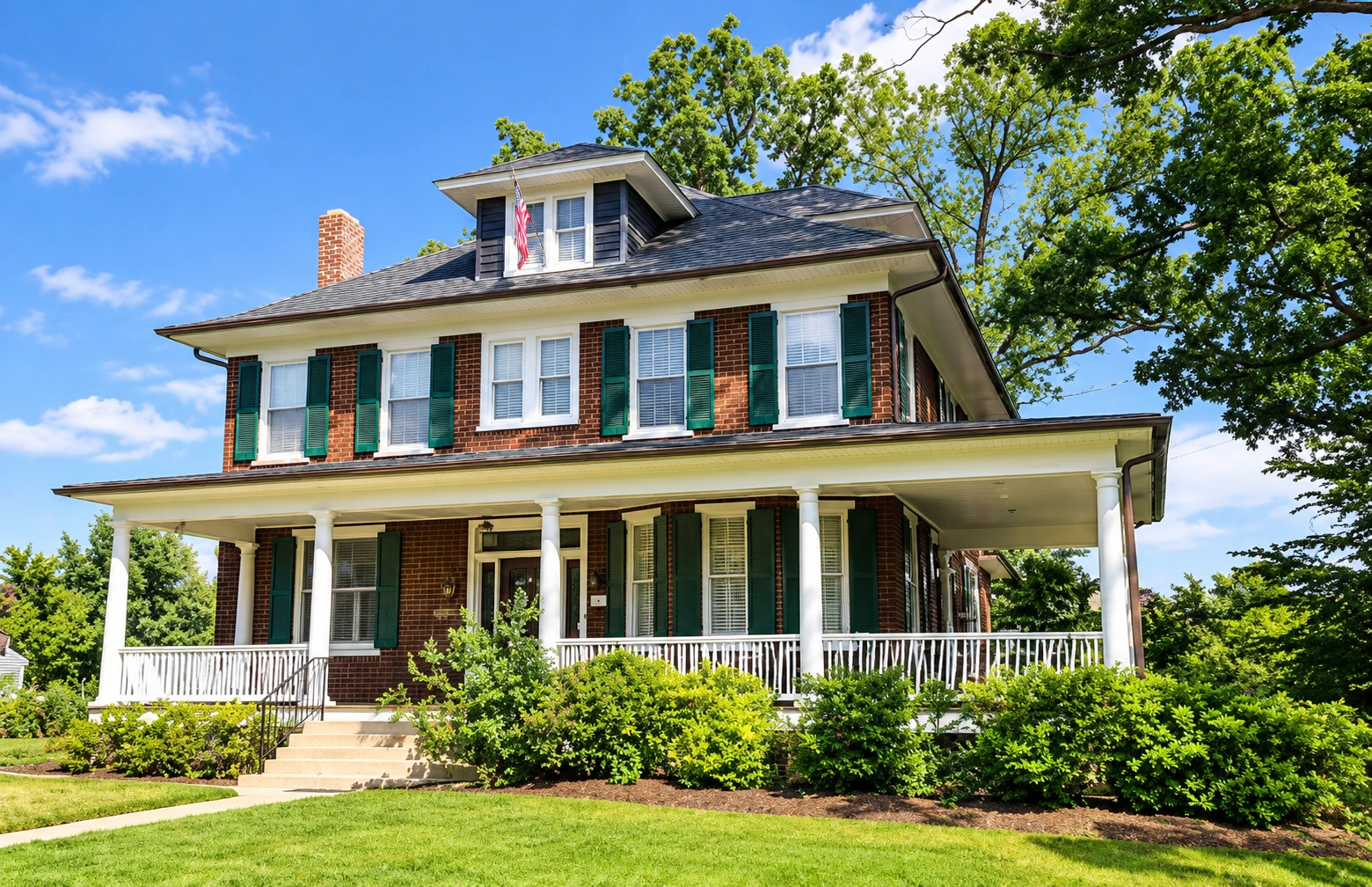
Restore or replicate architectural millwork
The defining feature of a Victorian porch is its decorative woodwork: spindles, brackets, trim, and turned posts and pillars. Where original pieces are missing or damaged, they can usually be restored or accurately replicated rather than replaced with plain modern stock.
| Element | Common issue | Best restoration approach |
|---|---|---|
| Spindles and balusters | Missing or split | Turn replacements on a lathe using original pieces as templates |
| Gingerbread brackets | Water rot at the joint seams | Consolidate soft wood with liquid epoxy, or cut matching Dutch inserts |
| Handrails | Modern flat boards installed | Re-profile historic molded cap rails that shed rainwater |
When custom-milling replacement trim, choose decay-resistant woods like Western Red Cedar, Spanish Cedar, or Accoya. Avoid pressure-treated pine for fine detail work, since it tends to warp as it dries.
Floor decking
Victorian porch floors were almost always built with 1×3 or 1×4 tongue-and-groove boards, usually fir, pine, or cedar. Today you have more choices, from authentic hardwoods to low-maintenance synthetic boards that replicate the traditional look.
- Slope for drainage. The floor should slope away from the house about a quarter inch per foot so water never stands on it.
- Back-prime the boards. If you use hardwood, prime all four sides and the tongue-and-groove edges of every board with an oil-based primer before installation.
- Keep joints tight. Install the boards tightly and blind-nail them through the tongue so no nail heads show on the surface.
Accurate color palettes
When it comes to color, Victorian schemes were grand and used several colors together. Plain white was rarely the choice. Depending on the era, whether Gothic Revival, Italianate, or Queen Anne, porches used rich colors that highlighted the architecture.
- The three-color rule. Use a body color for walls and ceilings, a trim color for railings and post frames, and an accent color for the fine detailing.
- Historic shades. Deep olive greens, rich terracotta, warm ochre, and dark burgundy are classic period choices.
- Ceiling tradition. Paint the porch ceiling a soft sky blue, often called haint blue, to reflect light and echo the sky.
Preserving history
Restoring a Victorian front porch is not a quick weekend project, but preserving the craftsmanship of a past era adds real curb appeal and value to your home. Take it step by step, protect the original materials wherever you can, and enjoy the process of bringing a piece of history back to life.
If you have a historic porch that needs attention, we are always happy to take a look and talk through your options.